一步步实现 Promises/A+ 规范 – 系列
Promises/A+ 规范
Promises/A+ 规范官网定义
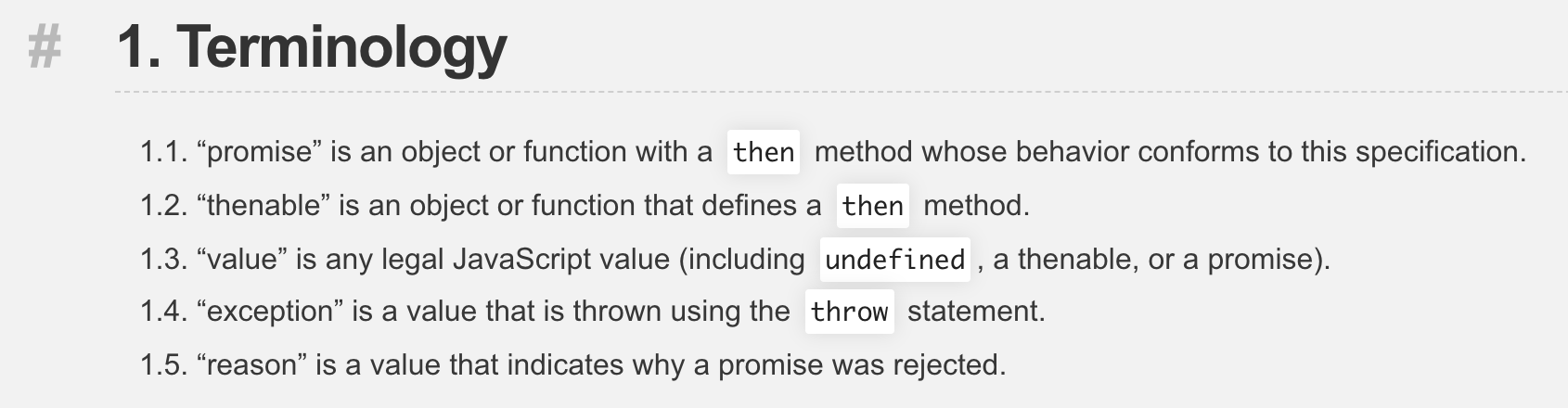
一些术语
翻译:
promise 是一个遵循本规范、并拥有 then 方法的对象或函数thenable 是一个定义了 then 方法的对象或函数value 是 JavaScript 中任意一种合法值(包括 undefined,thenable 以及 promise )exception 是一个使用 throw 语句抛出的值reason 是一个指示了 promise 为何被拒绝(rejected)的值
Promises/A+ 规范要求
状态要求
翻译:
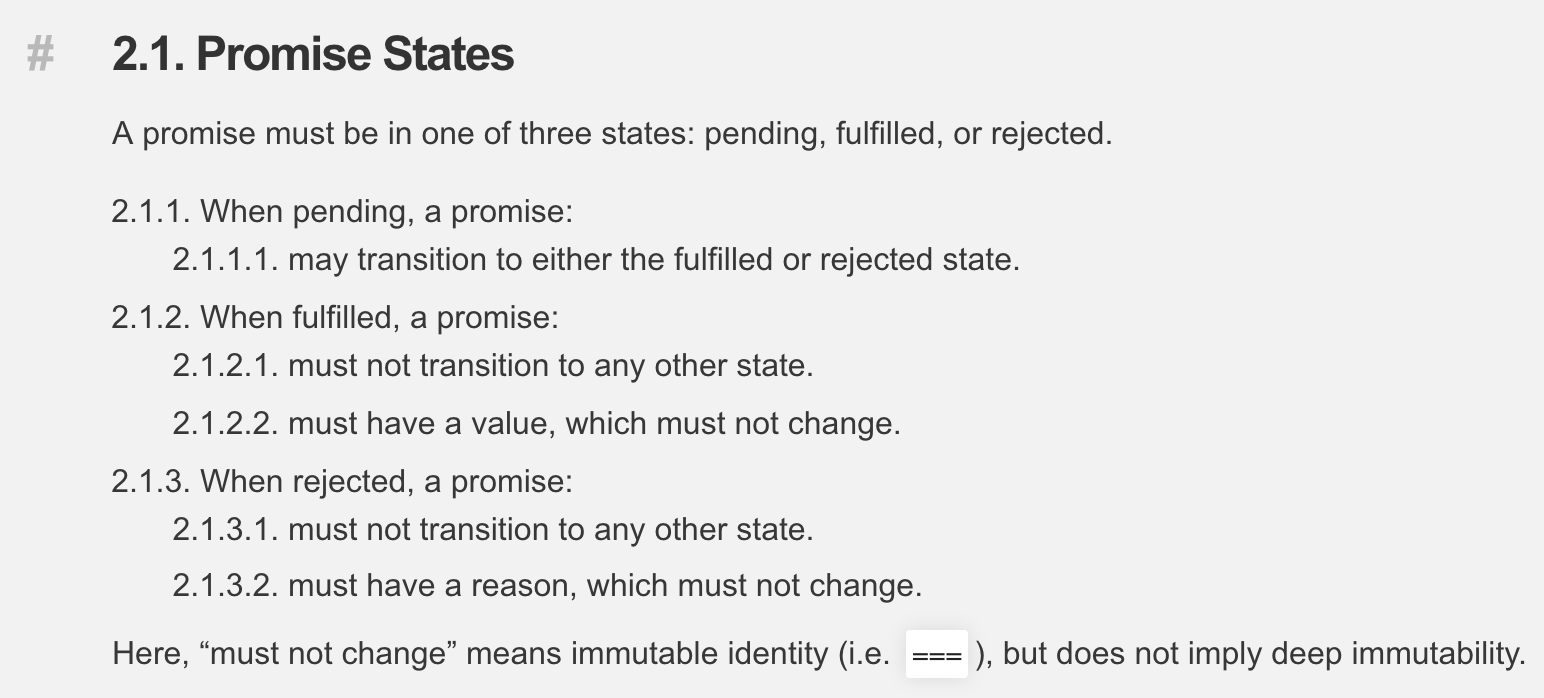
一个 Promise 必须是以下三种状态之一:等待态(pending)、完成态(fulfilled)或拒绝态(rejected)
- 处于
pending 状态,可以转化为 fulfilled 或 rejected
- 处于
fulfilled 状态,不能转换其它状态;且必须有一个不可改变的 value
- 处于
rejected 状态,不能转换其它状态;且必须又一个不可改变的 reason
这里的“不可改变”指的是可通过 === 进行比较,对于引用变量的复杂深层对象属性,不作约束
根据上述要求,验证 Promise 代码如下:
1
2
3
4
5
6
7
8
|
// 验证代码一
const promise = new Promise((resolve, reject) => {
  resolve("success");
  reject("fail");
});
console.log(promise);
// {status: 'resolved' value: 'success'}
// 状态不会由 resolved 变为 rejected
|
初步实现 Promise 如下
 1
 2
 3
 4
 5
 6
 7
 8
 9
10
11
12
13
14
15
16
17
18
19
20
21
22
23
24
25
26
27
28
29
|
// 实现代码一
const PENDING = "pending";
const RESOLVED = "resolved"; // fulfilled
const REJECTED = "rejected"; //rejected

class Promise {
  // 构造函数接收一个执行器作为参数
  constructor(executor) {
    // promise 状态
    this.status = PENDING;
    this.value = undefined;
    this.reason = undefined;
    const resolve = value => {
      if (this.status === PENDING) {
        this.value = value;
        this.status = RESOLVED;
      }
    };
    const reject = reason => {
      if (this.status === PENDING) {
        this.reason = reason;
        this.status = REJECTED;
      }
    };
    // 执行 执行器,并传入两个方法作为参数
    executor(resolve, reject);
  }
}
module.exports = Promise;
|
executor 错误收集
执行如下代码:
1
2
3
4
5
6
|
const promise = new Promise((resolve, reject) => {
  throw new Error("error");
});
console.log(promise);
// {status: 'rejected', reason: 'error'}
// 即直接抛出错误,需要执行 reject
|
因此需要修改实现
1
2
3
4
5
6
7
|
executor(resolve, reject);
// 改为
try {
  executor(resolve, reject);
} catch (error) {
  reject(error);
}
|
then 方法要求 - 第 1 部分
翻译:
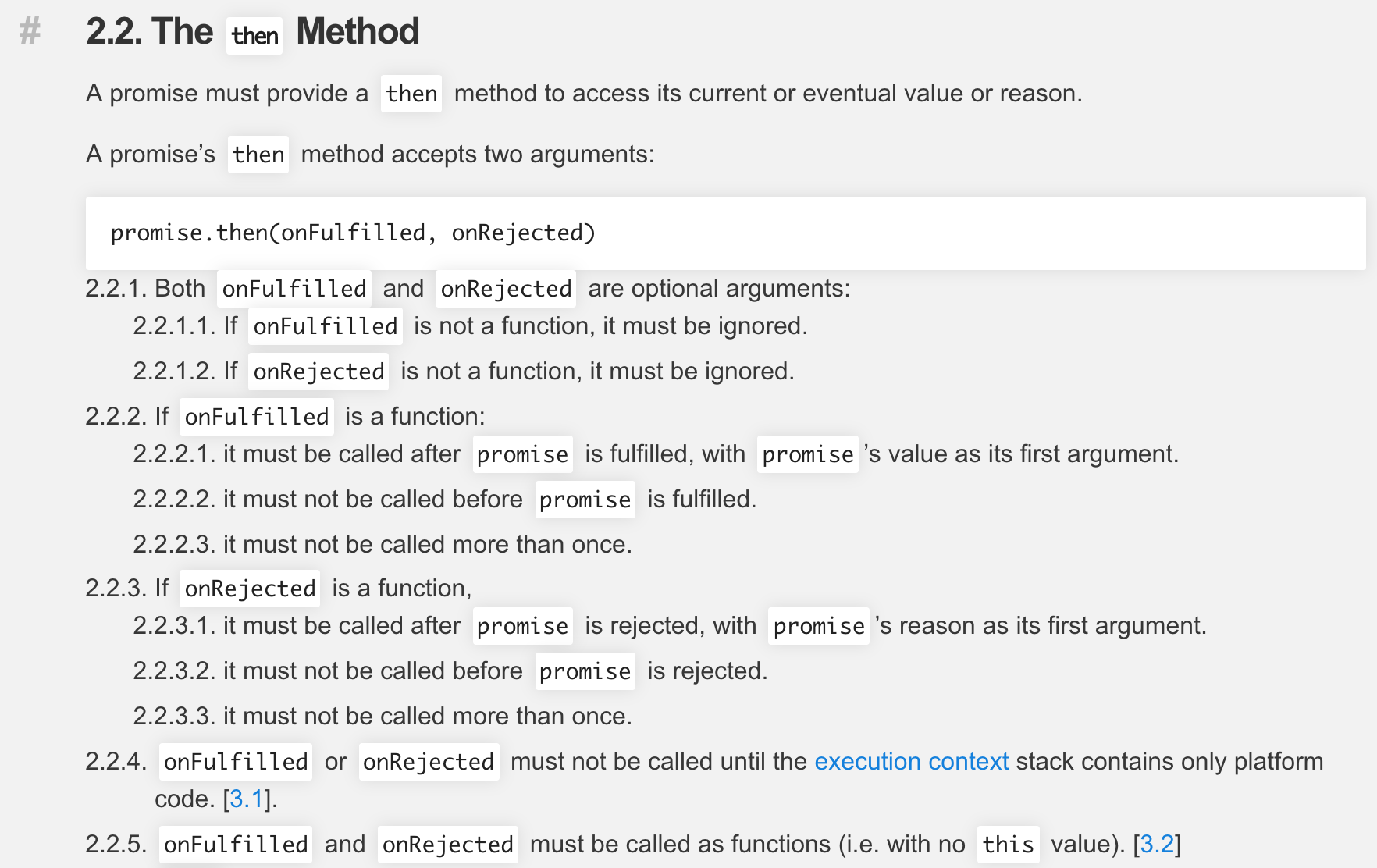
一个 Promise 必须提供一个 then 方法,来访问其当前或最终的 value 或 reason
Promise 的 then 方法接受两个参数
1
|
promise.then(onFulfilled, onRejected);
|
onFulfilled 与 onRejected 都是可选参数
- 如果
onFulfilled 不是函数,必须将其忽略
- 如果
onRejected 不是函数,必须将其忽略
- 如果
onFulfilled 是一个函数
- 当
promise 完成(fulfilled)后必须对其调用,并且 promise 最终的值(value)作为第一个参数
promise 未完成(fulfilled)前,不能对其调用- 调用次数不可超过一次
- 如果
onRejected 是一个函数
- 当
promise 被拒绝(rejected)后必须对其调用,并且 promise 最终的原因(reason)作为第一个参数
promise 未被拒绝(rejected)前,不能对其调用- 调用次数不可超过一次
- 这句意思是只有在
Promise 的执行器中调用了 resolve 或 reject 方法,才调用 then 方法中的 onFulfilled 或 onRejected 方法。可以看官网中的注释理解这条用途,就是为了保证 then 方法中的两个参数异步执行
onFulfilled 和 onRejected 必须被作为函数调用,即没有 this,严格模式下 this 为 undefined,非严格模式为全局对象
第4条理解起来可能比较费解,用代码演示它解决的痛点,往下看
根据上述要求,验证 Promise 代码如下:
 1
 2
 3
 4
 5
 6
 7
 8
 9
10
11
12
13
14
|
// 验证代码二
new Promise((resolve, reject) => {
  setTimeout(() => {
    resolve("success");
  }, 1000);
}).then(
  res => {
    console.log(res);
  },
  err => {
    console.log(err);
  }
);
// 延时 1s 打印 success
|
实现 Promise 如下
不实现第4条代码:
 1
 2
 3
 4
 5
 6
 7
 8
 9
10
11
12
13
14
15
16
17
18
19
20
21
22
23
24
25
26
27
28
29
30
31
32
33
34
35
36
37
38
39
40
41
42
43
44
45
46
47
48
49
50
51
52
53
54
55
56
57
58
59
60
|
// 实现代码二
const PENDING = "pending";
const RESOLVED = "resolved"; // fulfilled
const REJECTED = "rejected"; //rejected

class Promise {
  // 构造函数接受一个执行器作为参数
  constructor(executor) {
    // promise 状态
    this.status = PENDING;
    this.value = undefined;
    this.reason = undefined;
    // 成功回调数组
    this.onFulfilledCallbacks = [];
    // 失败回调数组
    this.onRejectedCallbacks = [];
    const resolve = value => {
      if (this.status === PENDING) {
        this.value = value;
        this.status = RESOLVED;
        this.onFulfilledCallbacks.forEach(func => {
          func(this.value);
        });
      }
    };
    const reject = reason => {
      if (this.status === PENDING) {
        this.reason = reason;
        this.status = REJECTED;
        this.onRejectedCallbacks.forEach(func => {
          func(this.reason);
        });
      }
    };
    try {
      // 执行 执行器,并传入两个方法作为参数
      executor(resolve, reject);
    } catch (error) {
      reject(error);
    }
  }
  // then 方法接受两个方法作为参数
  then(onFulfilled, onRejected) {
    // 根据状态执行不同的回调
    if (this.status === RESOLVED) {
      onFulfilled(this.value);
    } else if (this.status === REJECTED) {
      onRejected(this.reason);
    } else if (this.status === PENDING) {
      // pending 状态将方法存入对应的数组
      if (typeof onFulfilled === "function") {
        this.onFulfilledCallbacks.push(onFulfilled);
      }
      if (typeof onRejected === "function") {
        this.onRejectedCallbacks.push(onRejected);
      }
    }
  }
}
module.exports = Promise;
|
用 实现代码二 测试 验证代码二 时,测试结果符合规范。但面对同步、异步两种调用时,表现形式是不一样的,如 验证代码三 和 验证代码四 的输出结果不同
 1
 2
 3
 4
 5
 6
 7
 8
 9
10
11
12
13
14
15
16
17
18
19
20
21
22
23
24
25
|
// 验证代码三
new Promise((resolve, reject) => {
  console.log(1);
  setTimeout(() => {
    resolve('success');
  }, 300)
}).then((res) => {
  console.log(3);
}, (err) => {
  console.log(err);
})
console.log(2);
// 输出 1 2 3 符合规范
// --------------
// 验证代码四
new Promise((resolve, reject) => {
  console.log(1);
  resolve('success');
}).then((res) => {
  console.log(3);
}, (err) => {
  console.log(err);
})
console.log(2);
// 输出 1 3 2 不符合规范
|
因此需要将 resolve 和 reject 两个方法改为异步执行,同时 then 方法中的状态判断也就不需要了,因为 then 肯定先于 resolve 和 reject 执行,则状态一定是 pending,整体修改如下
 1
 2
 3
 4
 5
 6
 7
 8
 9
10
11
12
13
14
15
16
17
18
19
20
21
22
23
24
25
26
27
28
29
30
31
32
33
34
35
36
37
38
39
|
// resolve 方法修改
const resolve = value => {
  // 实现异步执行 then 方法中的两个参数 onFulfilled onRejected
  // 对应第4条要求
  const timer = setTimeout(() => {
    if (this.status === PENDING) {
      clearTimeout(timer);
      this.value = value;
      this.status = RESOLVED;
      this.onFulfilledCallbacks.forEach(func => {
        func(this.value);
      });
    }
  }, 0);
};
// reject 方法修改
const reject = reason => {
  // 实现异步执行 then 方法中的两个参数 onFulfilled onRejected
  // 对应第4条要求
  const timer = setTimeout(() => {
    if (this.status === PENDING) {
      clearTimeout(timer);
      this.reason = reason;
      this.status = REJECTED;
      this.onRejectedCallbacks.forEach(func => {
        func(this.reason);
      });
    }
  }, 0);
};
// then 方法简化
then(onFulfilled, onRejected) {
  if (typeof onFulfilled === "function") {
    this.onFulfilledCallbacks.push(onFulfilled);
  }
  if (typeof onRejected === "function") {
    this.onRejectedCallbacks.push(onRejected);
  }
}
|
这样对于 验证代码三 和 验证代码四 就统一了结果输出,并且符合规范
本篇实现了规范中对状态的要求,以及部分 then 方法的要求。在下一篇文章中将实现 then 链的逻辑